Showing posts with label city. Show all posts

a perilous city


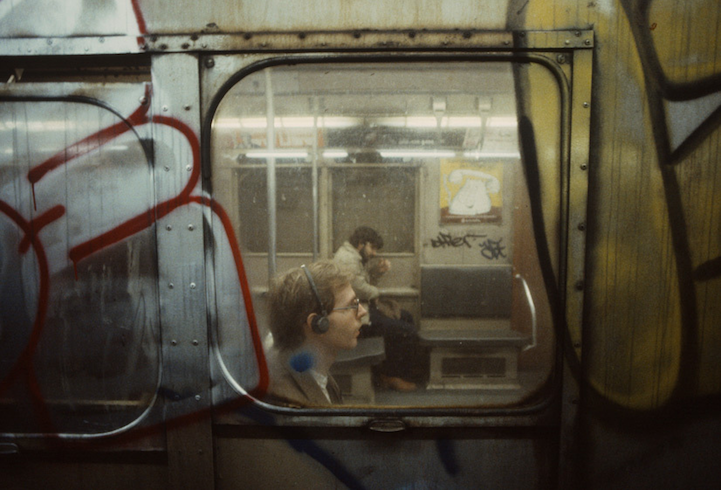
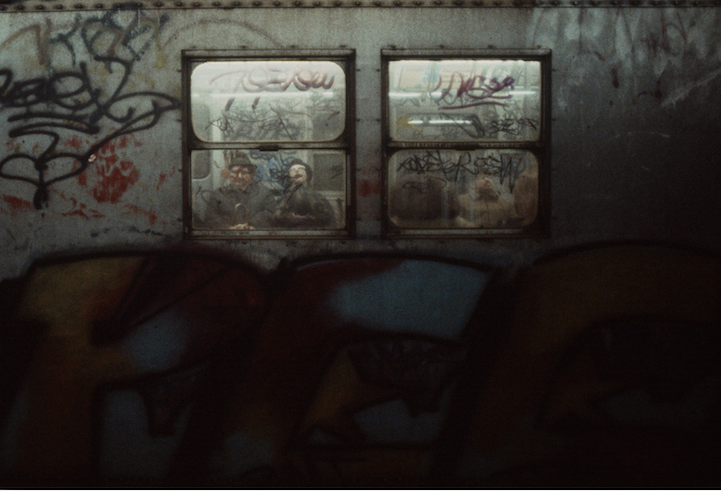
i once wrote about how you could still feel the evidence of new york's past as a perilous city when you go down under its subway system. i stumbled upon these images on the internet and they really fascinate me. it reminds me somehow of the commuter train i used to take to go to campus back in my university day. it was in a real horrendous condition and i had so so many terrible experience riding it. but those trains no longer exist nowadays replaced by all full air-conditioned train that are suitable to transport human being. there are of course still many flaws but it was a very significant improvement from what i used to experience. i keep saying that i do have hope on this city no matter how much conflicts i have with it.

urban terrace


i am not at all an architectural geek. as someone with too much interests, i must admit i'm not as deeply knowledgable as most of my fellow countrymen, who studied architecture, who i encountered when i lived in milan. although i will always carry it as my basic way of thinking and i'm still deeply rooted in it on daily basis (also when i go travel), i've long lost my appetite on contemporary architecture in the sense that i don't really care which starchitects do which new projects or who are the new emerging star in architecture. mostly because i'm no longer interested in flashy new buildings which are more often meaningless and out of context. they're just boring. aside from interior design which i've been doing for more than five years now, i paid attention more to urban issues, the city as container of activities. which was actually the subject i studied on my grad school.

one thing about grad school was that i started to learn again, and in the process of learning by doing, i somehow managed to narrow down and reshaped what actually really interest me, how my approach of design is, what my style is like, and those kind of things. it's like putting in structure who i really am architectural-wise and what my philosophy in this realm is. so when i first saw this building here i was immediately drawn to it. the simplicity, the materials, the color scheme, the grid, the transparency. i like how subtle it is, how it doesn't try to shout too much of itself like most new buildings are. and the more i read about it the more meaningful it is, how it's made for low maintenance and to last long.

and also, it's actually an open public building in the complex of paris saclay, which i believe i visited during this workshop, but i'm not sure since it was my first day and i arrived late and we were going from st.-germain-en-laye to versailles. whether i was in paris saclay or there was the director of paris saclay in the conference i can't remember hehe. and also, while the comue of paris saclay is south to paris, my thesis project was the comue of paris seine which is north west to paris. and it somehow reminds me that period of time. oh the good old time.

urban poetry


i always have a thing with neon light, as decoration, signage, or form of art. but what robert montgomery did here takes it to another level. with lights and poetry forming street art to be appreciated by a wide range of audience. for me the best kind of art is the kind that makes you feel like you're actually able to make one like it, you just never have thought of it. and this one is one of those kind. not the street art technically, but the simple lines of poetry.

urbanized: the language of a city

"Do not look at how many people are walking in the city, but look at how many people have stopped walking to stay and enjoy what is there" - Jan Gehl


Urbanized was very much entertaining and surprisingly turn out to be my favorite among Hustwit's documentary trilogy, Helvetica and Objectified. It might received some heavy critics from urban planners but I think it served its purpose for the non professionals and infuses new spirit and knowledge for those who's already familiar with architecture and urban design.

The film exposed cities from different kind of angles with cases from the slums in Mumbai, the TransMilenio in Bogota, the bike lane in Copenhagen, the public protest of Stuttgart 21 project, the High Line in New York City, the population decline of Detroit, the urban sprawl in Phoenix, and a lot others. The least attractive part of architecture / urban design in comparison to other design disciplines has always been the politics related to the government and bureaucracy and all that and to me it shows also in the film, how the politicians look pretentious and always seems like having an agenda.

Despite a lot of mockery over how this documentary trilogy was so hipsterish-ly packaged, I think Hustwit had pushed through another level of documentary films while at the same time raised more public awareness to the design industry.

drag queens


People say tourists should experience a city they travel to like locals do, but sometimes I think it also works the other way around, it's not a sin for locals to experience a city like tourists. I went to this drag queens performance when I visit a city in Central Java a while ago. That time I thought, geez, if only my local friends know they would surely make fun of me. It might not be a place where the locals hang out, if I were a local I don't think I'd ever went to such place. But then again when I thought of it, it was a fun performance, and the thought came to me, that maybe it's good every once in a while to see your city from another perspective.

the blue ride


Bangku Taman - Ode Buat Kota

Just a boring update from around the city :)

ps. the youtube video is quite awesome if you care to check out
ps2. updated my writing about the doctor here

infrastructure: a comparison

We all know that Bangkok is famous for its traffic but, tell you what, if you've experienced Jakarta, Bangkok isn't that bad at all.

But I've read that one of the reason is that because they've been enhancing the city's infrastructure with mass transportation system, the BTS and MRT, although so far it still cut only a relatively small percent of those who travel by cars.

We arrived late at night at the city and with the least energy we had, we rushed to a 24 hours McDonald (I know!). From the hotel we walked pass through the a BTS station, and my first impression of the city was that somehow it reminded me vaguely of Peter Cook's Archigram. It was somehow futuristic with all of the gigantic concrete beams span across the city (My pictures don't really explain this well, oh well..). I wonder how the society reacted when they first decided to build with all these structures that definitely change the face of the city. I mean, they don't really look that bad right now, but it must have been a drastic change, from a softer environment to a much massive solid one.

Other than cars, BTS and MRT, they have the famous tuk-tuk, which are allowed to speed in toll ways, hehe. Then they have bus, of course, which, unlike the ones at Jakarta, have clear numbers which make them easily recognized, and they only stop at the bus shelters. And it seems less scary to travel in their bus, at least there are no annoying street musicians or beggars or people selling things within the bus.

And then they have the boats.

I didn't really expect anything traveling to Bangkok, but being in the same region and timezone, GMT +7 (yeah like it matters :P), honestly I didn't think it would be this much of a difference between Bangkok and Jakarta, but fact is, they are way more advance than Jakarta.

the danish utopia

Found this article at a friend's blog and can't help myself not to post. The (rather old) article points Denmark as the happiest place on earth.
Danes in general had very little to complain about. Danes do have one potential complaint: high taxes. The happiest people in the world pay some of the highest taxes in the world -- between 50 percent and 70 percent of their incomes. In exchange, the government covers all health care and education, and spends more on children and the elderly than any country in the world per capita.

Those high taxes have another effect. Since a banker can end up taking home as much money as an artist, people don't chose careers based on income or status. "They have this thing called 'Jante-lov,' which essentially says, 'You're no better then anybody else,'" said Buettner. "A garbage man can live in a middle-class neighborhood and hold his head high."

Denmark is what is called a "post consumerist" society. People have nice things, but shopping and consuming is not a top priority.

And perhaps the bicycle is the best symbol of Danish happiness. Danes can all afford cars, but they choose bikes--simple, economical, nonpolluting machines that show no status and help keep people fit.
Having been "dealing" with some danish people these past few months doesn't make me believe they are as happy as it says*, but, damn, living in a city with thousands of things to complain every single day reading it is like reading about a utopia that can never happen. In fact, Denmark with the total area of 43,098.31 km2 has only 5.5 million population while Jakarta of 740.28 km2 has 9.5 million. Just imagine.

*maybe it's because this article was written in 2007 before the global economic crisis which also hit Denmark.

my city

I had a conversation with one of my friend abroad and when he said that he like this city more than that city he's currently living, i ask him why. He said, "Because there I can go everywhere by car and I can have my driver drive me anywhere". I was like, "..."

Sometimes I wonder if this city really belong only to those with cars, those who have sets of aircon in every corner of their house, those who.. argh I don't know..

p.s. There's this article about public space in city that you can read here.

this city sucks


Tired of everyday life.. Tired of myself..
Tired of this city..